

Long examination waiting times can extend from reception when information is not prepared in advance, causing patients to spend more time before seeing doctors.
Long examination waiting times are often most visible in waiting areas outside clinics, but the causes may appear much earlier. When patients only provide information after arriving, many tasks are concentrated at the same time.
Optimizing waiting time is not only about making doctors examine faster. Hospitals can reorganize reception, prepare information before visits and support early patient routing. This is also MedVita approach with Smart Reception solutions.
Traditional reception methods can extend the pre-examination journey
With processes depending on direct interaction, patients often only provide information after arriving at the hospital. After initial steps, they continue discussing needs and waiting for guidance to suitable areas. When many activities occur at reception, the time before meeting doctors can increase.
The problem becomes clearer when many patients arrive at the same period. Reception staff process information from many people with different conditions. Without prepared data, collection and processing start only after patients arrive.
This shows waiting time does not only depend on clinic capacity. Part of the journey happens before patients reach doctors, so reception-stage inefficiencies should also be considered when improving healthcare experiences.
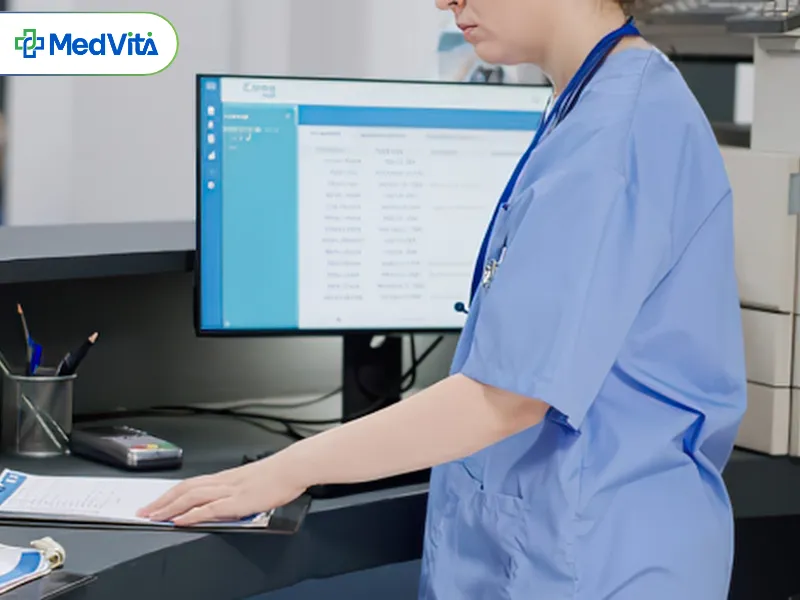
Patients wait longer when many tasks only begin at the hospital
A medical examination process needs information to operate. Hospitals need to know patient issues, relevant history and the next suitable steps. When data is collected only after arrival, processing is concentrated before the consultation.
Doctors also need to continue gathering information when patients enter the clinic. Without prepared history, interaction time is used to collect and arrange basic data before deeper medical discussion. Waiting time and examination time are connected.
Late information collection increases pre-examination workload
Symptoms, medical history, medications and related information may need recording before examination. If patients provide them only at healthcare facilities, hospitals must collect data while managing waiting flows.
Another approach is moving data preparation earlier. When patients provide information beforehand, data already exists before meeting doctors. Hospitals can organize next steps instead of starting everything at once.
Late routing can extend intermediate steps
After receiving information, patients need direction to suitable specialties or examination steps. If routing starts only after arrival, it becomes another task at reception and can increase waiting points.
Early routing does not mean technology replaces medical decisions. It uses initial information to support patient navigation. Better prepared data and flows help hospitals reduce unnecessary waiting points.
Reducing waiting time should begin before patients meet doctors
When improving the condition of long examination waiting times, hospitals can review the whole pre-examination journey instead of only focusing on clinic speed. If tasks can be completed earlier or supported by systems, workload at arrival can decrease. Reception changes from handling everything on-site to using prepared information.
This is how MedVita Smart Reception approaches the pre-examination stage. Patients can use the MedVita application to provide information at home or at the hospital, while AI supports symptom interviews and history collection.
AI systems support early medical history preparation
According to MedVita product information, the AI system uses question-and-answer methods to collect symptoms, medical history, medications and related information. This moves data preparation before direct doctor consultation.
After collection, the system also supports structured medical history summaries. Doctors receive prepared information for reference and verification during examination. Technology supports initial data processing without replacing medical evaluation.
Specialty routing and suggestions from initial information
Collected data can also support routing and suitable specialty suggestions. Instead of only recording information, data becomes input for organizing the next steps. This is one way MedVita aims to optimize patient flow.
When routing is supported earlier, hospitals can reduce intermediate reception steps. Patients also have a clearer journey before meeting doctors. The system helps organize flows based on available information.
Smart Reception creates benefits for both patients and doctors
For patients, pre-examination time is part of the hospital experience. Early information preparation and clearer journeys can reduce repeated waiting. MedVita Smart Reception aims to reduce waiting time and optimize patient flow.
Benefits continue when patients enter clinics. Prepared medical summaries give doctors additional reference information instead of collecting everything from the beginning. MedVita aims to shorten examination time and increase time for deeper care.
Reducing time does not mean forcing doctors to examine faster by reducing interaction. A better approach is reducing tasks that systems can prepare or support, allowing people to focus on communication and expertise.

Technology changes how reception is organized
Digital reception is not simply moving paper forms onto screens. If patients still wait until arrival to provide and process all information, technology value is limited. Smart reception considers when data is collected and how it is used afterward.
MedVita integrates AI from interviews and medical history collection to routing support and doctor summaries. These functions prepare data earlier and reduce gaps between reception and examination. Technology helps move information to the next stage.
This approach helps hospitals view reception as part of the entire healthcare process. Better organization at the beginning allows data to continue supporting clinics instead of stopping after procedures.
MedVita aims to optimize patient flow from the starting point
Smart Reception is part of the MedVita platform supporting smart hospital operations. The solution focuses on pre-examination, where patients create data and hospitals organize journeys.
Instead of replacing reception staff or doctors, MedVita positions AI as an information support tool. AI can interview, collect and summarize data while supporting routing; healthcare teams remain responsible for professional decisions.
When information is prepared early and used during consultations, value goes beyond faster reception. Hospitals can create smoother patient journeys from information submission to doctor visits.
Reducing waiting time should begin with how hospitals receive patients
Long examination waiting times does not necessarily need to be solved only by increasing examination speed, but can begin with better organization of steps before patients meet doctors. When MedVita Smart Reception MedVita supports medical history collection, summary preparation, routing and specialty suggestions from initial information, hospitals can reduce tasks concentrated at reception and optimize patient flow. AI supports information preparation and processing so medical teams can focus on professional interactions.